How to Sell at Best Buy: The Complete Guide for International Brands (2026)
Best Buy is the largest consumer electronics retailer in the United States. With just over 1,000 stores and roughly $43 billion in annual revenue, it remains the single most important brick-and-mortar destination for CE brands looking to establish a credible U.S. retail presence. Getting on Best Buy's shelves — or even on BestBuy.com — is a genuine commercial milestone. But getting there requires a strategy that most international brands are not prepared for.
This guide is written for founders, brand directors, and business development leads at international consumer electronics brands who are seriously considering Best Buy as a U.S. retail target. If you're at the early research stage, this will tell you what's actually involved. If you're actively pursuing placement, this is your operational roadmap.
What Best Buy Actually Is — And What It Isn't
Best Buy is not a general merchandise retailer. It is a specialist consumer electronics chain with a focused buyer organization, a tech-savvy customer base, and category managers who understand the products they sell at a level most retail buyers do not. This is a strength for your pitch — but it also means you need to arrive with a product story that speaks to informed buyers, not a generic mass-market pitch.
Best Buy's customer skews male, tech-forward, and research-driven. They know what they want before they walk in the door. Your packaging, your price point, and your marketing story need to be calibrated for that customer — not for a general Walmart shopper.
Best Buy operates ~1,000 U.S. stores — dramatically reduced from its peak, but still the dominant CE physical footprint in the country
BestBuy.com is a major dotcom account in its own right — many brands get online placement before in-store
Best Buy has a buying team organized by category: computing, mobile, audio, imaging, smart home, and more
Best Buy's Geek Squad service creates a built-in upsell ecosystem for connected and technically complex products
Best Buy competes aggressively with Amazon on price — your pricing strategy must account for this from day one
Step 1 — Understand Best Buy's Category Structure and Where You Fit
Before you approach a single buyer, you need to know which category you're being considered for, who runs that category, and what the current assortment looks like. Best Buy organizes its buying team by category, and different categories have very different dynamics.
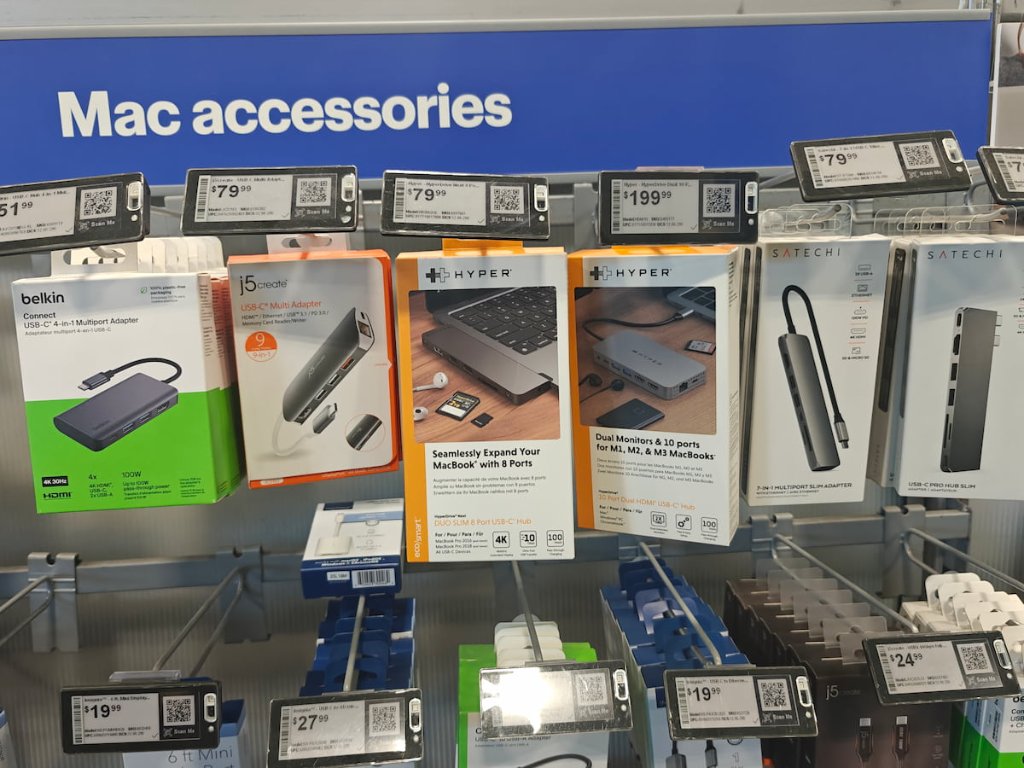
Walk Best Buy's floor or spend time on BestBuy.com. Find your product's natural home. Understand what's already there — what brands, what price points, what form factors. The buyer you'll be pitching will know this shelf better than you do. You need to know it equally well.
Most international brands approach Best Buy without having done the shelf audit. They describe their product in generic terms — 'great quality,' 'innovative design' — without knowing what's already on the shelf, what's selling, and what's missing. Buyers notice this immediately. It signals that you're not ready.
Step 2 — Build Your Commercial Story Before You Approach Anyone
Getting a meeting with a Best Buy buyer is not the hard part. Getting a purchase order after that meeting is. The brands that fail at Best Buy are almost always brands that arrived at the conversation with a great product but without a complete commercial story.
Your commercial story needs to answer the buyer's actual questions — not the ones they'll ask you, but the ones they'll be asking themselves after you leave the room:
What is the retail price, and is there enough margin for Best Buy to make money at that price?
How does this product compare to what's already on the shelf — and why would a Best Buy customer choose it?
What sell-through velocity can I realistically expect?
What marketing support is the brand committing to — co-op advertising, digital promotion, end-cap support?
Does this brand have the operational infrastructure to fulfill orders reliably?
Is there an existing consumer demand signal — online sales, reviews, press coverage — that validates this product?
Step 3 — Prepare Your Pricing Architecture
Pricing is where most international brands make fatal errors in the Best Buy pitch process. Best Buy needs a minimum of 40–50% gross margin on the products it carries. That margin calculation starts from your wholesale price — the price at which you sell to Best Buy or to their distributor.
If your product retails at $99 at Best Buy, and Best Buy needs 45 points of margin, your wholesale price to Best Buy needs to be around $54.45 or below. That wholesale price then has to be profitable for you — after cost of goods, shipping, duties, and any distribution markup.
What it costs to make the product at scale, including packaging, QC, and any accessories included in the box.
COGS plus freight, duties, import fees, and warehousing in the U.S. This is the true floor of your pricing architecture.
Your sell-in price. If going through a distributor, add their margin here. This price needs to allow Best Buy to achieve their margin target at the MSRP you want.
The retail price at Best Buy. Must be consistent with your pricing everywhere else — BestBuy.com, Amazon, your DTC site. Price inconsistency is a relationship-ending error.
Step 4 — Understand Best Buy's Vendor Requirements
Best Buy has specific operational requirements for vendors. These are not optional — they are prerequisites. Getting your product listed is not just a commercial negotiation; it is an operational qualification process.
EDI compliance: All purchase orders are transmitted through Electronic Data Interchange. You need EDI capability — either directly or through a third-party provider
FCC certification: All electronic products sold in the U.S. must carry FCC certification. This is non-negotiable and takes time to obtain — plan for 8–12 weeks minimum
UL/ETL listing: Products with power components (chargers, adapters, cables) typically require UL or ETL safety listing in addition to FCC
MSRP consistency: Best Buy tracks your pricing across all channels. Selling below MSRP on Amazon or your own site will damage your retailer relationship
Certificate of Insurance: Best Buy will require you to name them as an additional insured on your product liability policy
Vendor Portal onboarding: Best Buy uses an internal vendor portal for purchase order management, invoicing, and compliance documentation
Step 5 — Get in Front of the Right Buyer
Best Buy does not have a public vendor application portal the way some retailers do. The primary path to a buyer conversation is through relationships — either your own network or that of a trusted U.S. retail representative.
Trade shows are one avenue — CES in January is the most important event of the year for CE brands pursuing Best Buy. Best Buy's buyers attend CES actively and are accessible there in ways they are not accessible through email or phone. However, a CES meeting alone rarely closes a deal. It starts a conversation.
Cold email to a Best Buy buyer's inbox rarely results in a response. The volume of vendor solicitations they receive is enormous. The brands that get meetings are almost always introduced through a trusted intermediary — a rep firm, a consultant with existing relationships, or a vendor they already work with. If you don't have that access, finding someone who does is usually the fastest path forward.
Step 6 — Build a Pitch That Answers the Buyer's Real Questions
A Best Buy pitch is not a product demo. It is a business case. The buyer is evaluating whether your product will sell, whether your brand can support it, and whether the commercial program you're proposing works for their category.
A strong pitch for Best Buy typically includes:
A clear category rationale — why this product belongs at Best Buy, and specifically what gap it fills in the current assortment
Consumer demand evidence — Amazon BSR, DTC velocity, press coverage, reviews, social media engagement
A detailed pricing architecture — MSRP, wholesale, margin, and any promotional pricing commitment
A sell-through forecast — a realistic projection of weekly/monthly unit velocity by store count
A marketing support commitment — co-op advertising budget, digital spend on BestBuy.com, field training, or end-cap investment
Operational readiness proof — your distribution partner, your EDI capability, your FCC documentation timeline
Step 7 — Navigate the Purchase Order and Onboarding Process
If your pitch lands and the buyer wants to move forward, you enter the purchase order and onboarding process. This is where many international brands run into delays — not because of commercial disagreements, but because of operational unpreparedness.
Best Buy's vendor onboarding can take 60–90 days from PO commitment to first shipment, depending on the speed of your compliance documentation and EDI setup. Build this timeline into your planning from the start. Missing a store reset window because of onboarding delays is a common and preventable mistake.
The Bottom Line: What It Actually Takes
Getting into Best Buy as an international CE brand is achievable — but it requires more preparation than most brands expect. The commercial story, the pricing architecture, the compliance documentation, and the operational infrastructure all have to be in place before the first buyer conversation, not after.
Lov Retail was built specifically to help international CE brands navigate the U.S. retail landscape — from first buyer introduction to purchase order to store reset. Our direct relationships with Best Buy buyers, combined with our operational experience, compress the timeline and eliminate the guesswork. The Retail Readiness Report is where we start every engagement.