How to Break Into the U.S. Retail Market: 8 Steps for International Brands (2026)
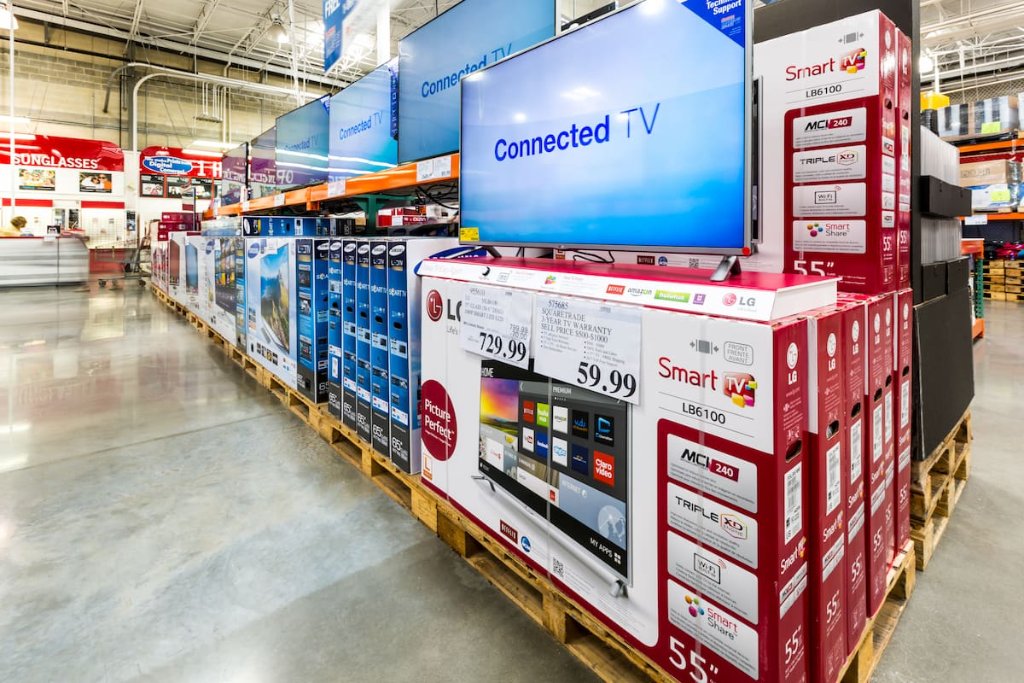
The U.S. retail market is the largest and most competitive in the world, with over $5.3 trillion in annual consumer spending. For international brands, it represents an extraordinary commercial opportunity — and an equally extraordinary operational challenge. Getting onto American retail shelves requires navigating a complex ecosystem of buyers, distributors, compliance requirements, and channel dynamics that most international brands have never encountered before.
This guide provides a structured, step-by-step framework for international brand founders and business development executives approaching the U.S. retail market for the first time — or attempting to significantly scale an existing U.S. retail presence.
The U.S. retail market does not reward the best product. It rewards the best-prepared brand. Countless excellent products have failed to secure U.S. retail placement not because of product quality, but because of commercial unpreparedness — wrong pricing, weak packaging, missing compliance documentation, no distribution infrastructure, or no buyer access. Preparation is the competitive advantage.
Step 1 — Map the U.S. Retail Landscape and Identify Your Target Channels
The U.S. retail landscape is not a monolith. It is a complex ecosystem of channel types, each with different buyer profiles, margin expectations, customer demographics, and operational requirements. Before approaching any retailer, you need a clear view of the landscape and a deliberate decision about which channels to pursue first.
Walmart, Target, and Costco. Enormous scale, demanding operational requirements, tight margins. Best for brands with proven velocity data and full operational infrastructure.
Best Buy, Micro Center. Higher average transaction value, tech-forward buyer. Best for CE, connected devices, and premium accessories.
Staples, Office Depot. Strong for productivity accessories, workspace products, and business-use CE. Underestimated by many international brands.
Abt Electronics, Fry's (historical), regional chains. Often more accessible than national accounts and provide proof-of-concept data for larger conversations.
BestBuy.com, Walmart.com, Target.com, Amazon Marketplace. Often achievable before in-store placement, and provides velocity data that strengthens the in-store pitch.
Step 2 — Build Your Pricing Architecture for the U.S. Market
U.S. retail pricing is fundamentally different from direct-to-consumer or export pricing. Every layer of the channel extracts margin — your distributor, the retailer, the promotional calendar. Building a sustainable pricing architecture for U.S. retail requires working backwards from the desired retail price and ensuring every party in the chain can make money.

Target MSRP: What price point positions your product correctly in the U.S. competitive landscape?
Retailer margin requirement: Most major U.S. retailers require 40–55% gross margin on new products
Distributor margin: If using a U.S. distributor (often required), add 15–25% distributor margin on top of the retailer's requirement
Your landed cost: COGS + U.S. freight + duties + U.S. warehousing — this is your true floor
The viability check: Is the gap between your landed cost and the distributor sell-in price sufficient for your business to be profitable? If not, either the product is not viable for U.S. retail at that price point, or the cost structure needs to be re-engineered
Step 3 — Secure U.S. Distribution Infrastructure
Most major U.S. retailers will not buy directly from an international manufacturer. They require either a U.S.-registered vendor entity or a domestic distributor who takes inventory risk and handles domestic logistics. Identifying and securing the right U.S. distribution partner is often the most important operational step in a U.S. retail market entry.
U.S. distributors vary significantly in their focus, capabilities, and retailer relationships. Some are category specialists — focused exclusively on CE, personal care, or food and beverage. Others are generalist distributors with relationships across multiple retailer categories. The right distributor for your brand depends on your category, your target retailers, and your volume expectations.
Step 4 — Achieve U.S. Regulatory Compliance
U.S. regulatory compliance is non-negotiable. Retailers will not onboard a new vendor without the required certifications, and attempting to ship product without the proper documentation creates significant legal and financial risk.
FCC certification (Part 15) for any electronic product — required for all CE, wireless devices, and products with intentional or unintentional radiators
UL or ETL safety listing for products with power components — chargers, adapters, cables, batteries
CPSC compliance for products in categories covered by the Consumer Product Safety Improvement Act
California Prop 65 compliance if selling in California (effectively required for any national retailer)
GS1 barcoding — U.S. retailers require GS1-registered UPC or EAN barcodes for all products
EDI capability — all major U.S. retailers require electronic data interchange for purchase order transmission and invoicing
Step 5 — Build Your Commercial Proof Points
U.S. retail buyers are risk managers. Their primary job is to select products that will sell through — not just sell in. Every piece of evidence you can provide that demonstrates consumer demand for your product reduces their perception of risk and makes the buying decision easier.
Strongest to weakest: (1) Existing U.S. retail sell-through data from another retailer, (2) Strong Amazon BSR and review count in the U.S. marketplace, (3) DTC U.S. revenue and website traffic data, (4) International retail sell-through data (applies with discount), (5) Press coverage from U.S. media outlets, (6) Social media following with U.S. audience composition data. Build as many of these as possible before approaching major retail buyers.
Step 6 — Build Your Buyer Access Strategy
Buyer access is the primary constraint for most international brands entering U.S. retail. You can have the right product, the right price, the right packaging, and the right compliance documentation — and still fail to get a meeting with the right buyer.

Trade shows: CES (January), Inspired Home Show, ASD Market Week — events where buyers actively engage with new brands
RangeMe: Target and other retailers actively use RangeMe to discover new brands. A complete, well-photographed profile is essential
LinkedIn outreach: Buyer contact information is often findable on LinkedIn. Warm introductions through mutual connections are far more effective than cold messages
Retail representative firms: Rep firms like Lov Retail have existing relationships with buyers and can introduce brands to the right decision makers directly
Existing vendor referrals: If you have a relationship with any brand already carried by your target retailer, a warm introduction from that vendor contact can be the most effective path
Step 7 — Build a Pitch That Closes
A U.S. retail pitch is not a product presentation. It is a business case. The buyer is not asking 'is this a good product?' They are asking 'will this product sell in my stores, can this vendor support it, and does the commercial program work for my category?'
A pitch that closes at a major U.S. retailer needs to contain:
A specific category gap argument — not 'our product is great' but 'here is the specific gap in your current assortment that our product fills, and here is why your customer will respond to it'
Consumer demand evidence — the commercial proof points from Step 5, organized for quick consumption
A complete pricing architecture — MSRP, wholesale, margin, and competitive comparison
A marketing support plan — how you will drive traffic and sell-through, not just sell-in
A sell-through forecast — a realistic, data-backed projection of weekly unit velocity by store count
An operational readiness summary — your distributor, your EDI status, your compliance documentation timeline
Step 8 — Prepare for Onboarding and First Reset
Getting the purchase order is not the finish line. It is the starting line. The gap between PO commitment and first product on shelf is typically 60–90 days for a new vendor — and the operational execution during this period determines whether you get reorders.
Vendor portal onboarding: Complete all retailer-specific onboarding documentation immediately upon PO issuance
EDI testing: Confirm EDI connectivity with the retailer's system before the first shipment
Initial inventory planning: Understand the retailer's initial order quantity, replenishment cadence, and store count
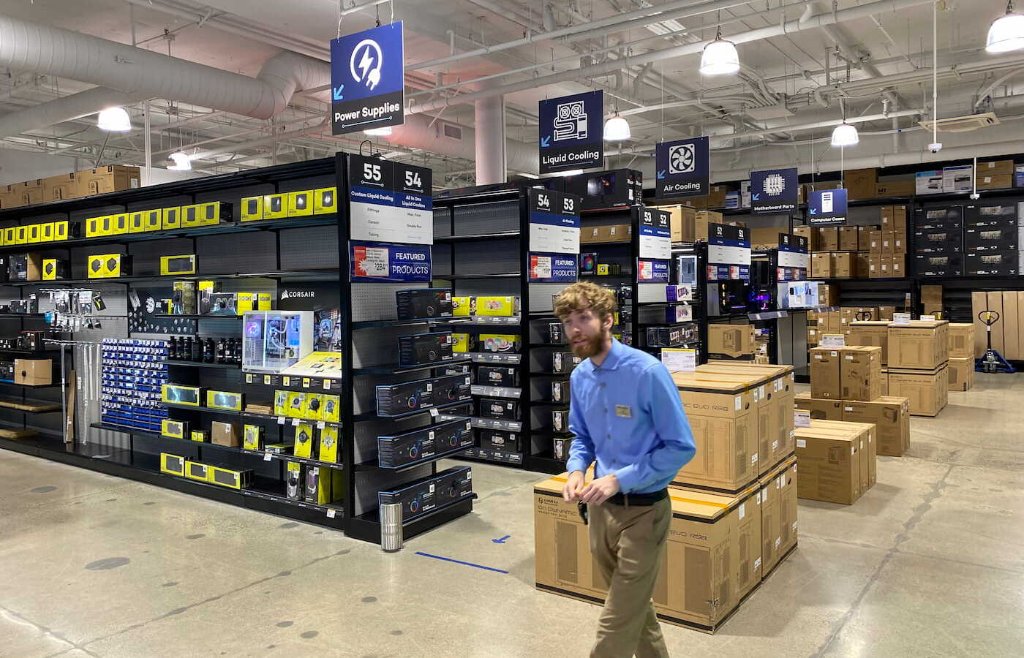
In-store execution: Arrange for field merchandising support at launch to ensure correct placement and signage
Sell-through monitoring: Establish a process for monitoring weekly sell-through data by store and responding to velocity signals
Buyer communication: Maintain proactive communication with your buyer through the first 90 days — share sell-through data, address any operational issues immediately, and begin laying the groundwork for expanded placement
The Retail Readiness Report is a comprehensive evaluation of your brand's preparedness across all 8 dimensions covered in this guide — pricing architecture, packaging, compliance, distribution infrastructure, commercial proof points, buyer access, pitch quality, and operational readiness. It tells you exactly where you are strong, where you have gaps, and what the highest-priority actions are before your first major U.S. retail pitch.